RobertDraws.com – International curators increasingly place digital illustration and new media at the center of major art exhibitions, shifting how audiences, collectors, and institutions define contemporary art today.
Over the past decade, museums and biennials have integrated digital illustration and new media into their core programming. Curators no longer treat digital work as a side room experience. Instead, they frame it as a key lens for reading global culture, technology, and politics. This shift brings screen-based artworks to the same level of visibility as painting, sculpture, and photography.
Institutions respond to a generation raised on screens and social platforms. They understand that visual storytelling now unfolds on tablets, gaming consoles, and immersive installations. As a result, artists using digital illustration and new tools receive prime gallery spaces and headline slots in international festivals.
Collectors also adjust their expectations. They seek works that live partly or entirely in the cloud, while still demanding strong concepts and craft. Because of this, digital illustration and new modes of display gain recognition in prize lists, auctions, and institutional acquisitions.
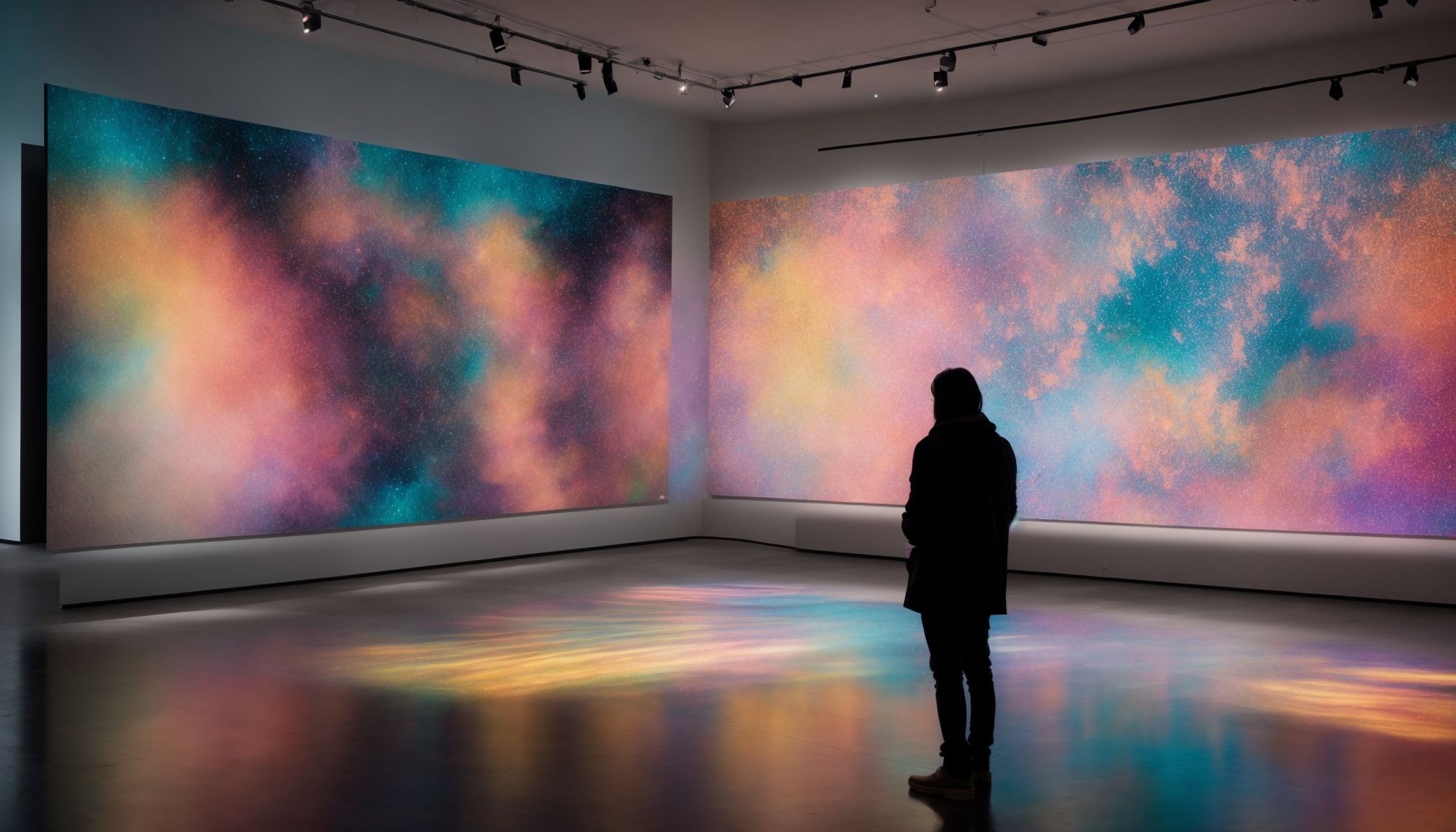
Curators experiment with new ways to install digital illustration and new media artworks. Some exhibitions use large-scale projections to transform entire walls into moving canvases. Others favor intimate screens that encourage visitors to sit, listen, and interact with layered narratives. The common goal is clear: provide a focused experience, not just a passing glance.
Galleries redesign spaces to handle sound, heat, and cables without distracting from the art. They balance darkened rooms for video with open zones for interactive pieces. Meanwhile, wall texts and catalogs explain the software, devices, and conceptual frameworks behind the work, helping audiences understand both process and meaning.
Read More: How major museums collect and present digital and media art
Some shows group artists by theme, such as climate anxiety, online identity, or global migration. Others focus on technical approaches like generative illustration or real-time data visualizations. In every case, digital illustration and new formats allow curators to address contemporary issues with immediacy and visual impact.
Many artists trained in drawing, painting, or printmaking now adopt digital illustration and new tools as natural extensions of their practice. Tablets, stylus pens, and animation software let them refine lines, colors, and textures with high precision. However, these tools also open ways to animate still images, add sound, and create interactive storylines.
Some creators blend hand-drawn sketches with 3D modeling, game engines, or motion capture. They challenge traditional categories by presenting illustrated characters that move through virtual worlds or respond to audience input. This hybrid approach expands what a “finished artwork” can look like inside a gallery.
Artists from regions with limited access to physical infrastructures also benefit. Digital illustration and new channels let them share work globally without shipping costs or border issues. Online festivals, virtual residencies, and streaming events connect these creators with curators and fans across continents.
International audiences increasingly expect exhibitions to engage multiple senses. Digital illustration and new media respond with interactive screens, spatial audio, and motion-sensitive installations. Visitors can manipulate images, trigger animations, or explore branching storylines by moving through the space.
This active engagement deepens understanding of complex themes. For example, a project about data privacy may invite visitors to share voluntary details and then visualize them in real time. Another installation might translate environmental data into evolving illustrated landscapes, showing how rising temperatures transform familiar scenes.
At the same time, curators must protect accessibility. Not every visitor wants or is able to interact with technology. Therefore, many exhibitions include clear instructions, alternative viewing modes, and quiet zones. This ensures that digital illustration and new technologies enhance inclusion rather than create new barriers.
The rapid rise of digital illustration and new media in international art exhibitions brings practical challenges. Institutions must secure long-term storage for files, maintain outdated software, and replace failing hardware without altering artworks. Conservation teams now document not just appearance but also code, device specifications, and interaction patterns.
Funding models also evolve. Licensing, editions, and maintenance agreements influence how museums and collectors commit to digital pieces. Some artists release works in limited formats, while others embrace open distribution. In each case, digital illustration and new concerns shape contracts and long-term planning.
Despite these hurdles, the momentum remains strong. Educational programs, residencies, and archives dedicated to digital illustration and new practices continue to grow worldwide. As more institutions share experiences and technical standards, international exhibitions can present ambitious media-rich projects with greater confidence.
In this changing landscape, one trend stands out: artists, curators, and audiences treat digital illustration and new practices not as a novelty, but as a central, enduring language of contemporary art that will keep evolving alongside global technologies and cultural debates.