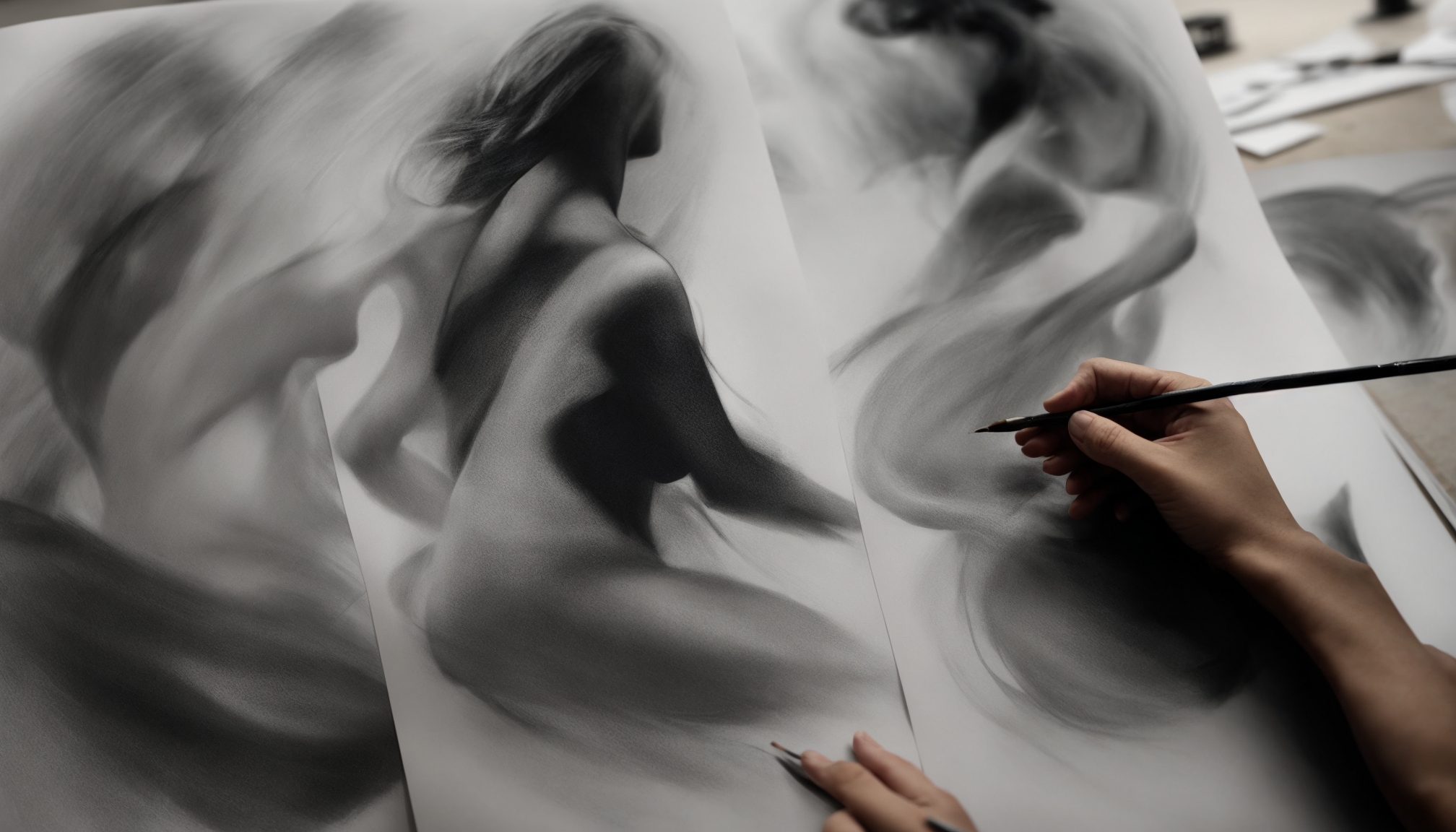
RobertDraws.com – mastering the ability to practice gesture drawing better can dramatically improve your character art by capturing fluid poses and dynamic movement in your sketches.
Gesture drawing focuses on capturing the essence and movement of a figure, rather than detailed anatomy. To practice gesture drawing better, artists should prioritize speed and fluidity to represent action and posture effectively. Start with quick sketches that last from 30 seconds to 2 minutes, enabling you to loosen up and observe the motion.
Choosing the right tools will support your ability to practice gesture drawing better. Many artists prefer using charcoal sticks, graphite pencils, or digital tablets with pressure-sensitive pens for fluid lines. Experiment with various mediums to find what best suits your style and encourages expressive strokes.
Warming up is essential to practice gesture drawing better by loosening your wrist and exploring different motions. Simple exercises like drawing continuous curving lines, circles, and quick figure sketches can prepare your hand and mind for more complex poses.
Utilize photographs, videos, and life models as references when you practice gesture drawing better. Observing real human movement helps to understand weight distribution and balance. Online platforms offer timed gesture drawing sessions that replicate live art classes, enhancing your quick-sketch skills.
Read More: Gesture Drawing: The Basics by Drawspace
To practice gesture drawing better consistently, focus on capturing the flow instead of getting caught in details. Use long and sweeping lines to indicate direction and energy in the figure. Over time, increase the duration of sketches to incorporate more anatomy after grasping the pose’s fundamental gestures.
Effective character art begins with a strong foundation in gesture drawing. Timely and expressive sketches improve the believability of your characters by conveying posture and emotion naturally. Regularly embedding this practice into your workflow ensures gradual and meaningful improvement.
Make sure to visit practice gesture drawing better resources to deepen your skills and build confidence in character creation.
Robert Draws - The surge of entry‑level creators on platforms like Instagram shows a 42% increase in new illustration accounts…
Robert Draws - A recent survey by UNESCO reveals that 68% of art schools worldwide have revamped curricula to include…
Robert Draws - A recent survey by the National Endowment for the Arts reported that 68% of educators who incorporated…
Robert Draws - A recent survey by Art Education Research Institute 2024 shows 68% of art teachers report higher student…
Robert Draws - The global digital art software market hit $10.3 billion in 2023, yet 68% of self-taught beginners abandon…
Robert Draws - A comprehensive 2024 survey by the Association of Independent Colleges of Art and Design indicates that applications…