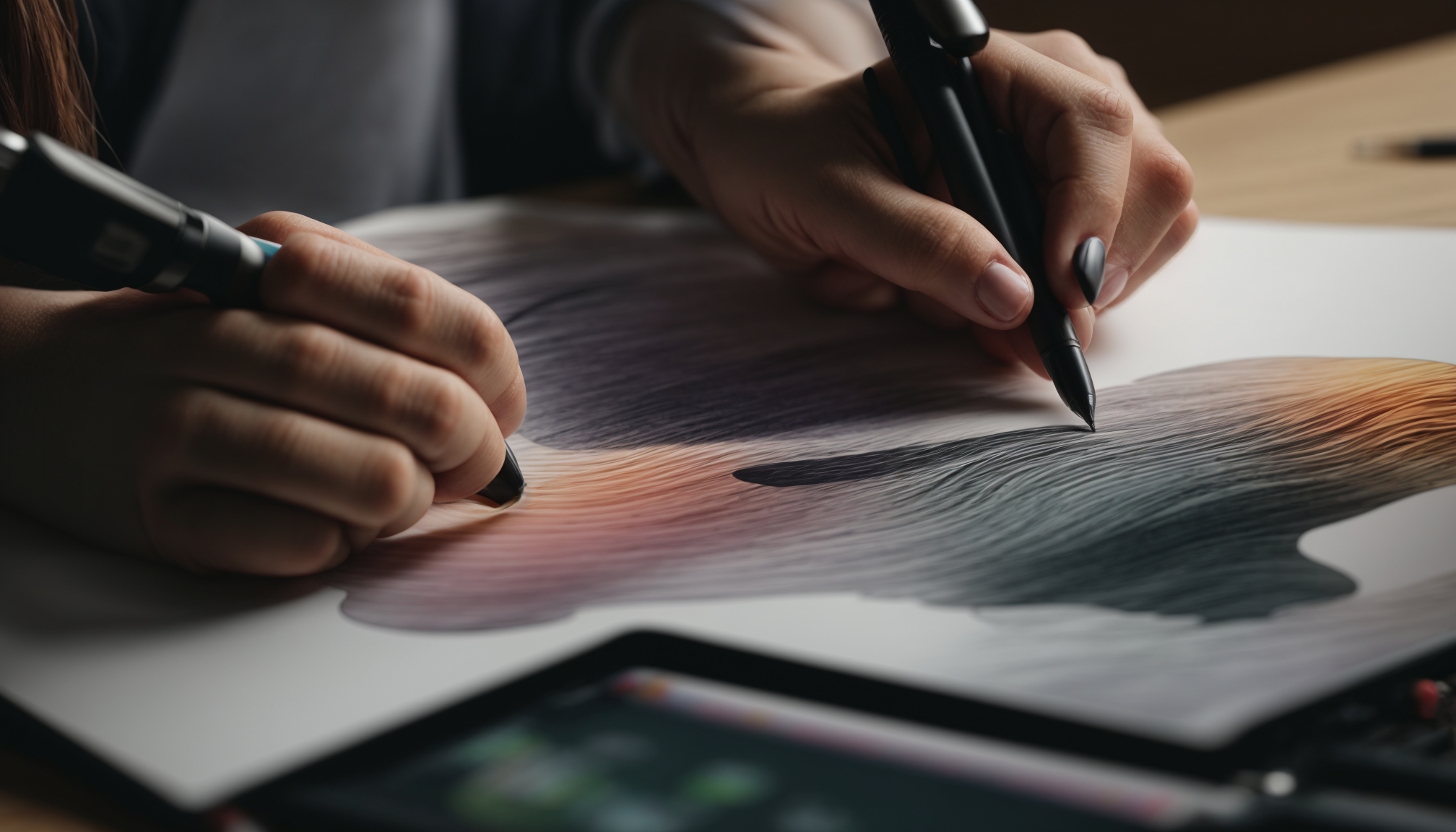
RobertDraws.com Digital shading techniques beginners find essential are the foundation of creating stunning, dimensional illustrations that capture attention and realism from the very first stroke.
Grasping the fundamentals of light and shadow is crucial before applying any digital shading techniques beginners should use. The way light interacts with different surfaces defines volume and texture, which makes flat drawings come alive. Beginners should start by studying simple shapes like spheres and cubes to see how shading creates the illusion of depth.
When adopting digital shading techniques beginners are likely to explore, selecting the proper software and brushes makes a significant difference. Popular illustration tools such as Procreate, Adobe Photoshop, and Clip Studio Paint offer various brushes tailored for shading effects. Brush opacity, hardness, and blending modes also contribute greatly to achieving smooth gradations and textures.
Start by blocking in the main shadows where the light source is weakest. Using layers helps organize highlights and shadows separately. Experiment with blending tools to soften transitions. Applying multiple values from dark to light builds dimensionality progressively. Remember to pay attention to the edges — some areas require sharp shadows, while others call for a soft gradient.
Avoid excessive contrast that can flatten the image instead of enhancing it. Overusing the same shading style may make the illustration look unnatural and stiff. Also, not considering the light direction consistently throughout the artwork can cause confusion in depth perception. Digital shading techniques beginners employ should always maintain harmony across the piece.
Once comfortable with basics, integrate texture brushes to mimic real-world materials like skin, fabric, or metal. Experiment with ambient occlusion, where shadows appear darkest in crevices and areas lacking light exposure. Use color to add depth rather than relying solely on grayscale. These advanced touches elevate your digital shading techniques beginners rely on to make artwork stand out.
Using digital shading techniques beginners must practice consistently to develop a natural sense of depth and volume in their illustrations. Mastering these skills brings a new level of professionalism and creativity that resonates in every piece created.
Robert Draws - A recent survey by Art Education Research Institute 2024 shows 68% of art teachers report higher student…
Robert Draws - The global digital art software market hit $10.3 billion in 2023, yet 68% of self-taught beginners abandon…
Robert Draws - A comprehensive 2024 survey by the Association of Independent Colleges of Art and Design indicates that applications…
Robert Draws - The global digital art market has witnessed an unprecedented surge, yet the educational framework for aspiring artists…
Robert Draws - A 2023 survey by the National Art Education Association revealed that 72% of beginners abandon visual arts…
Robert Draws - A recent survey conducted by the Strada Education Network in 2022 reveals that 39% of visual arts…