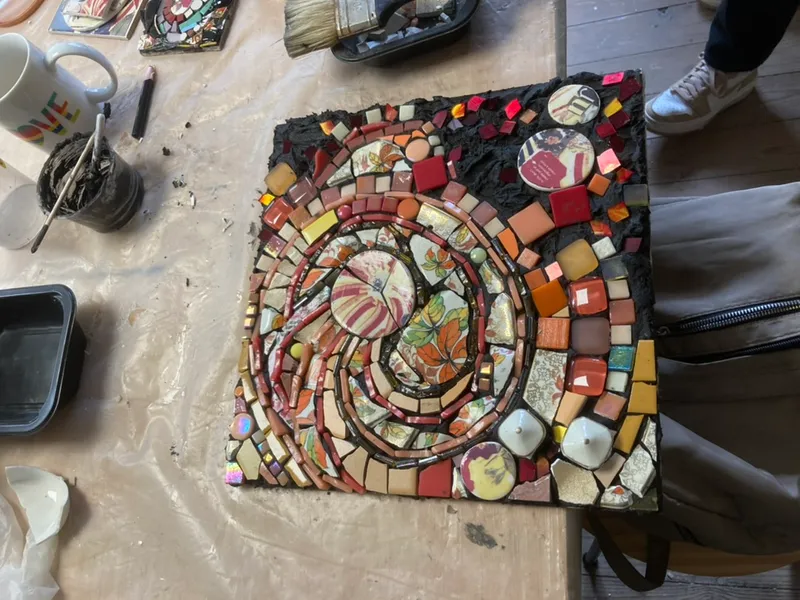
Robert Draws – Mosaic and collage are two captivating forms of art that both involve the arrangement of materials to create a cohesive and striking visual composition. Although they share similarities in the way elements are assembled. They differ greatly in technique, materials, and the artistic experiences they offer. While mosaic art typically involves the meticulous arrangement of small, uniform pieces of material to form intricate designs, collage allows for a more flexible, expressive approach by combining a variety of materials in often spontaneous ways. This article will explore the unique characteristics, creation methods, and histories of mosaic and collage, offering a deeper understanding of these two remarkable artistic practices.
Mosaic is an ancient art form where artists arrange small, uniform pieces of materials like stone, glass, or ceramic to create larger images or patterns. They cut these materials into geometric shapes and carefully place them on a surface, such as a wall, floor, or other solid base, to form a cohesive image. Artists have used mosaics in architecture, religious art, and decorative designs throughout history, with origins tracing back to ancient civilizations.
“Read about: 5 Ways to Appreciate Visual Art Like a True Enthusiast”
Collage, on the other hand, is a modern art technique that involves attaching various materials—ranging from paper and photographs to fabric, natural elements, and found objects—onto a surface to create an artwork. Unlike mosaics, collage does not rely on uniformity. It’s defined by its flexibility and freedom of material choice. This technique became prominent in the early 20th century. It’s particularly in the works of avant-garde artists like Pablo Picasso and Georges Braque. Who used collage to break away from traditional forms of painting.
Creating a mosaic typically involves a precise and step-by-step process:
This process requires precision and takes time to complete intricate pieces.
In contrast, the process of creating a collage is more spontaneous and flexible:
The collage process is often characterized by trial and error, allowing artists to explore creativity without strict guidelines.
“Read more: The Elegance of Lilly Gerrard Lifestyle Unveiled”
Mosaic artists primarily use materials that can be cut into small, uniform pieces. Some common materials include:
These materials are chosen for their durability, ease of cutting, and ability to form a seamless design.
Collage, being more experimental, can incorporate a variety of materials, such as:
This variety of materials gives artists the freedom to create multidimensional, textured, and often narrative-rich artworks.
Mosaic artworks are known for:
Collage art, on the other hand, has distinctive features, such as:
RobertDraws.com - Digital drawing basics pen tablet techniques open new creative opportunities for beginners discovering illustration through technology. Understanding Digital…
RobertDraws.com - Mastering basic digital drawing techniques is crucial for beginners aiming to create stunning illustrations using a pen tablet…
RobertDraws.com - Mastering basic digital drawing techniques is essential for artists entering the world of digital illustration to create stunning…
RobertDraws.com - Mastering basic digital drawing techniques is essential for artists entering the world of digital illustration to create stunning…
RobertDraws.com - Mastering basic digital drawing techniques is essential for artists entering the world of digital illustration to create stunning…
RobertDraws.com - Digital illustration and photography open vast creative possibilities for artists at all levels. Whether you’re a beginner or…