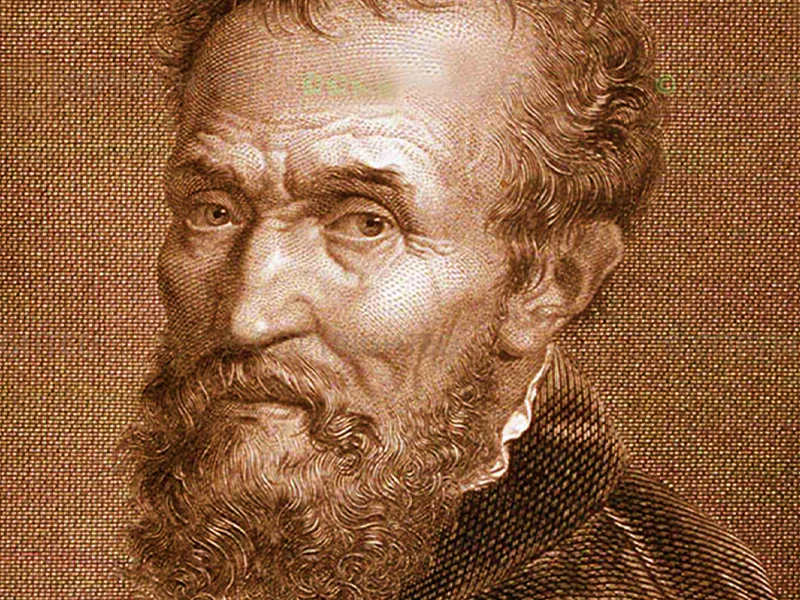
Robert Draws – Life and legacy of Michelangelo Buonarroti are among the most celebrated in the world of art history. A true Renaissance polymath, Michelangelo was a sculptor, painter, architect, and poet whose works defined the era. Known for his exceptional mastery of the human form. He created iconic masterpieces that continue to inspire artists and art lovers alike. From his famous statue of David to the awe-inspiring frescoes on the ceiling of the Sistine Chapel, Michelangelo’s influence extends beyond art into the cultural and intellectual movements of the Renaissance. This article delves into his life and how his legacy shaped the course of art history.
Michelangelo di Lodovico Buonarroti Simoni was born on March 6, 1475, in the small town of Caprese, near Arezzo, Tuscany. His father, Leonardo di Buonarroti Simoni, was a magistrate. The family relocated to Florence when Michelangelo was still an infant. Tragically, Michelangelo’s mother passed away when he was just six years old. He was raised by a nurse and his father. Though his father initially enrolled him in formal education, Michelangelo showed little interest in academic subjects. Instead, he became captivated by the work of local artists and their craft. At the age of 13, his father acknowledged his son’s passion for art and enrolled him in the workshop of the renowned painter Domenico Ghirlandaio.
“Read about: 8 Core Elements of Visual Art Every Artist Should Know”
Michelangelo’s early career was significantly shaped by his association with the powerful Medici family. During his time at the Medici court, he had access to some of the most influential figures of the Renaissance. Including poets, scholars, and scientists. He studied anatomy by examining cadavers. Which had a lasting impact on his ability to accurately depict the human body. His work from this period, such as the relief sculptures Battle of the Centaurs and Madonna Seated on a Step. Displayed the remarkable technical skills and creativity that would become his trademarks.
As Life and Legacy of Michelangelo, By 1496, Michelangelo had moved to Rome. Where his artistic career flourished. He created his first major commission, the statue of Bacchus (1496), which, despite being rejected by its original commissioner, Cardinal Raffaele Riario, later found a home in the collection of banker Jacopo Galli. Another key moment in his life came in 1497, when he was commissioned to create the Pietà by the French Cardinal Jean de Bilheres-Lagraulas. The Pietà, a sculpture of the Virgin Mary holding the body of Christ, remains one of Michelangelo’s most celebrated works and can now be found in St. Peter’s Basilica in the Vatican.
Michelangelo’s return to Florence in 1499 marked a turning point in his career. He was tasked with completing the David, a monumental sculpture that had been started by Agostino di Duccio but left unfinished for years. Michelangelo’s interpretation of David, showcasing both physical strength and emotional intensity, became a symbol of the city’s resilience and freedom. Today, the David is displayed in the Accademia Gallery in Florence, admired for its technical brilliance and artistic depth.
“Read more: A Bold Move: Lady Gaga Ditches Makeup for Celebration”
In 1505, Pope Julius II summoned Michelangelo to Rome to work on his grand tomb. However, the artist’s attention soon shifted to another monumental project—the ceiling of the Sistine Chapel. Over the next four years, Michelangelo transformed the chapel’s ceiling, creating over 300 figures that depicted scenes from the Bible, including the famous Creation of Adam. Despite facing numerous challenges, including the physical strain of working on the ceiling and conflicts with the Pope, Michelangelo’s work on the Sistine Chapel remains one of the greatest achievements in Western art. Later, in 1536, he completed the Last Judgment on the altar wall of the Sistine Chapel, another iconic fresco that showcases his exceptional skill in portraying the human form.
Michelangelo’s architectural genius became apparent later in his career, particularly with his work on St. Peter’s Basilica in Rome. Appointed as chief architect in 1546, he was responsible for designing the church’s magnificent dome, which would become a defining feature of Renaissance architecture. Although the dome was not completed until after his death, Michelangelo’s design left a lasting impact on the structure and the entire field of architecture.
Michelangelo continued to work tirelessly until his death on February 18, 1564, at the age of 88. Based on Life and Legacy of Michelangelo, through his paintings, sculptures, and architecture, continues to inspire and influence the world of art today, cementing his place as one of the most influential figures in the history of Western civilization.