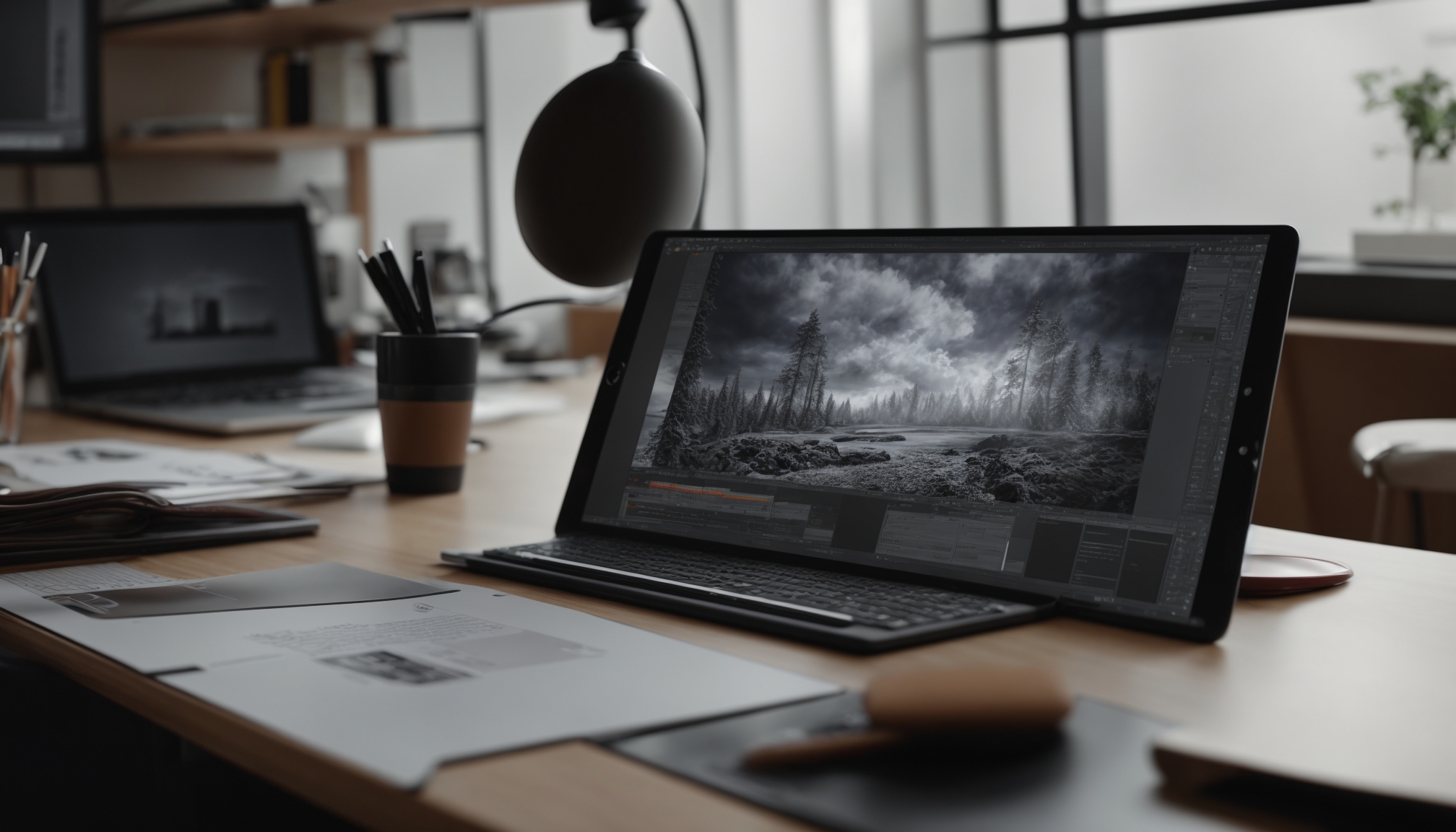
RobertDraws.com – 3d tools influence 2d illustration workflows as creative studios around the world integrate new technologies to streamline production and enhance artistic expression.
The adoption of 3d tools influence 2d illustration workflows has grown significantly over recent years. Studios now merge traditional 2D techniques with cutting-edge 3D software to create richer, more dynamic visuals. This blend allows artists to build accurate perspectives, complex lighting, and three-dimensional forms that enhance flat illustrations.
By incorporating 3d tools influence 2d illustration workflows, artists gain precision and flexibility. They can manipulate models, test compositions, and simulate lighting scenarios before committing to final drawings. This reduces revisions and accelerates deadlines, often producing more polished results faster. Furthermore, 3D elements can be exported and rendered alongside 2D layers, creating hybrid artworks that stand out in commercial and entertainment media.
Despite the benefits, challenges persist when studios adopt 3d tools influence 2d workflows. Learning curves for 3D software can be steep, requiring artists to invest time in acquiring new skills. Additionally, integrating 3D renders seamlessly into 2D compositions demands technical understanding and careful aesthetic balance. Some purist artists also resist the change, preferring traditional hand-drawn methods over digital augmentation.
Gradually, the impact of 3d tools influence 2d illustration workflows is reshaping creative production standards worldwide. Studios leverage these hybrid processes to meet client demands for innovation and efficiency. Artists embrace expanded toolkits that blur boundaries between dimensions, opening possibilities for immersive storytelling and interactive designs. As technology advances, the fusion of 2D and 3D art forms is set to grow even stronger and more widespread.
Ultimately, 3d tools influence 2d illustration workflows by empowering artists globally with fresh creative opportunities. Studios willing to adapt benefit from faster project turnaround and more engaging results. By combining the strength of both domains, illustrators achieve higher quality and richer experiences for audiences across industries, from animation to marketing and publishing.
Discover more about how 3d tools influence 2d creative processes to stay ahead in the evolving digital art landscape.